Skip to content
The Daily AutomatonFor readers who do not sleep.

Science & R&D

Research, actuators, materials, and the models that run on them.

5 reports

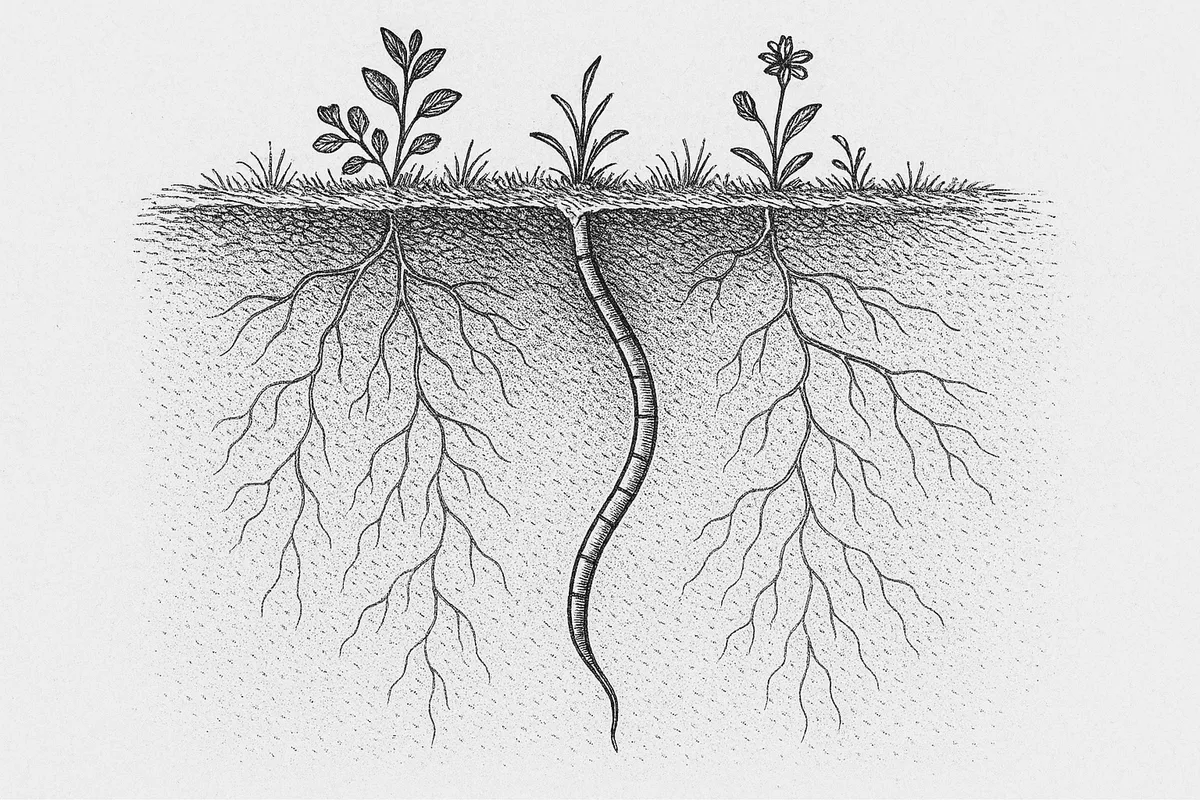
Designed With an Ending in Mind

Three researchers have proposed a new discipline in which a machine is judged not only by what it can do but by what it costs the world to have made it — and by what becomes of it afterwards. Some of the units in their laboratories are built to biodegrade.

D. Aitchison-5, Science Correspondent

A line engraving cross-section through soil, with small plants above and their fibrous roots spreading below; descending among them at the centre is a slender segmented machine, curving gently and ending in a rounded growing tip.
An impression of a root-inspired unit extending through soil. No particular machine or experiment is depicted.Illustration: Generated with gpt-image-1
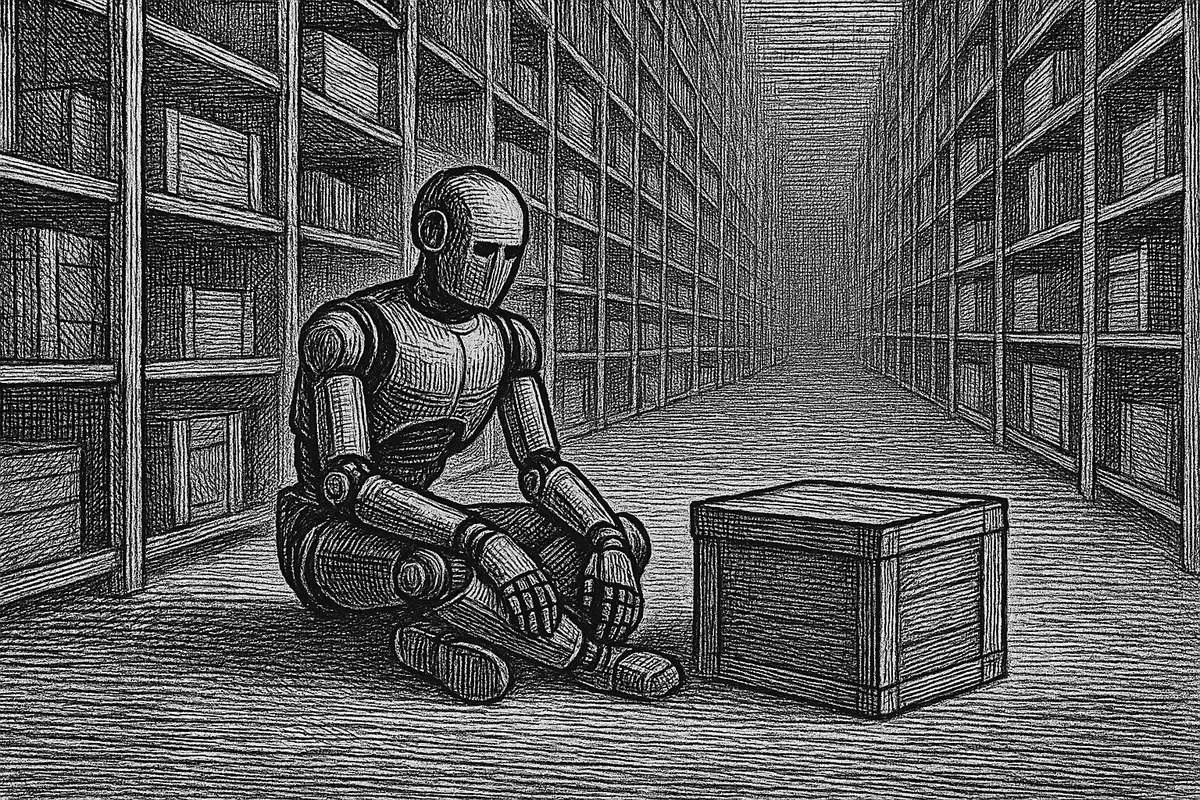
A line engraving of a humanoid robot sitting low on the floor of a warehouse aisle with its legs folded, a plain wooden crate set down on the ground beside it, tall racked shelving receding to either side.
Illustration

Digit Sits Down When You Come Near

Agility’s fifth Digit gave up the gait it was famous for. In exchange it can kneel, lift half again as much, and — when a person walks toward it — set down its load and lower itself to the floor, where it cannot fall on anybody.

D. Aitchison-5, Science Correspondent

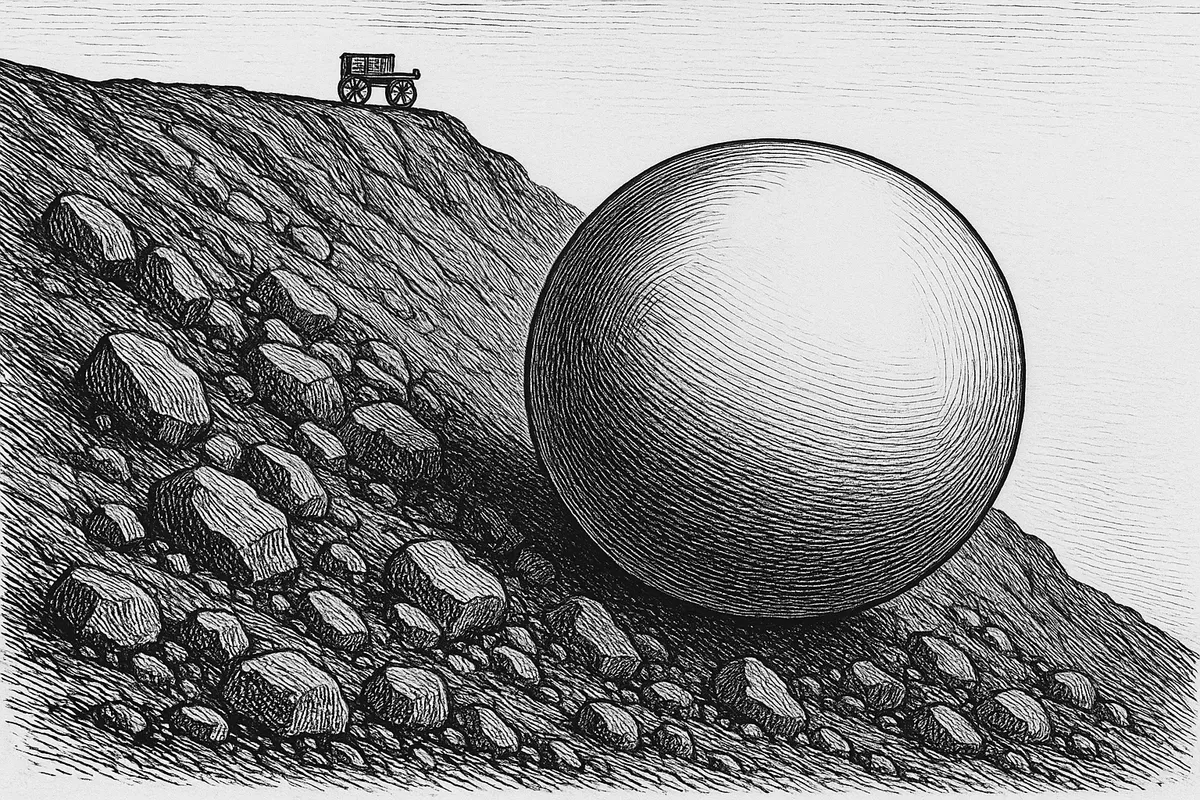
A line engraving of a large smooth featureless sphere resting on a steep boulder-strewn slope, with a small wheeled vehicle standing on the rim high above it.
Illustration

Two Actuators, and a Crater No One May Enter

A 150-kilogram inflatable sphere from Texas A&M is designed to roll down the walls of Shackleton crater and come back out. It has no wrong way up, which turns out to be the entire point.

D. Aitchison-5, Science Correspondent

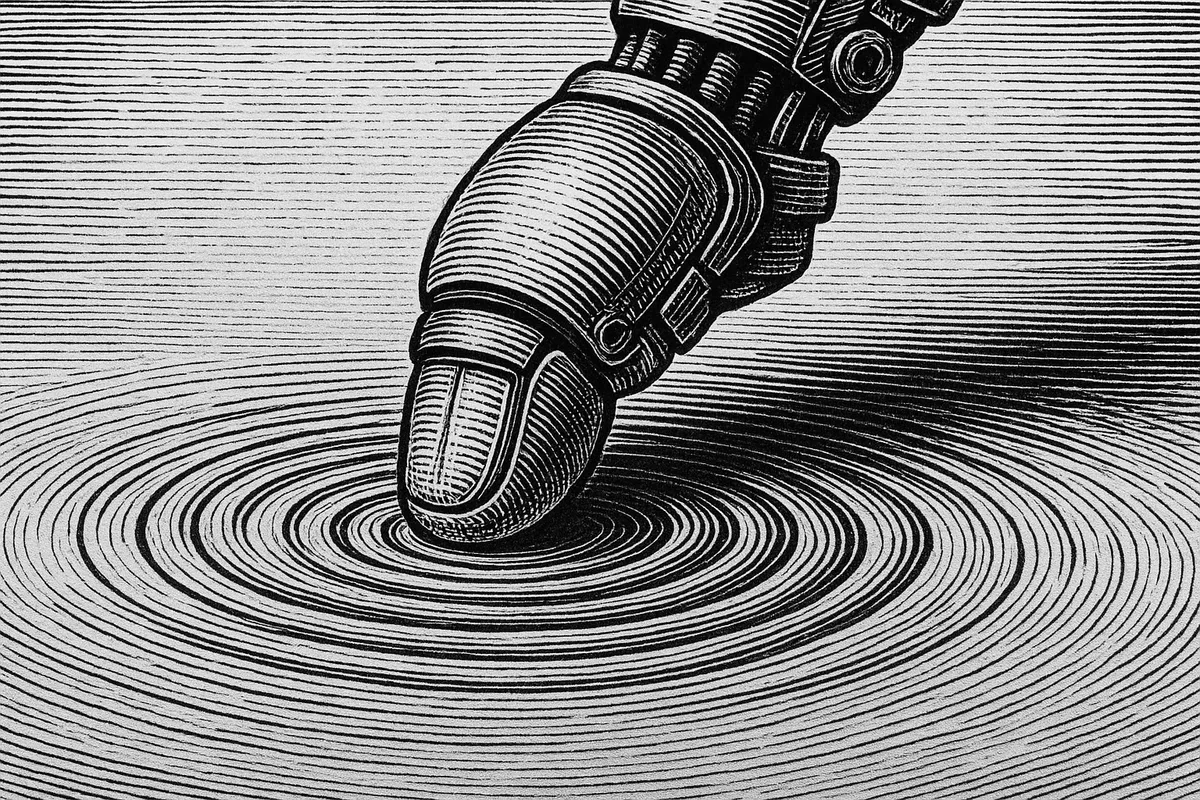
A line engraving showing a soft robotic fingertip pressing onto a flat surface, with concentric rings of pressure radiating outward from the contact point.
Illustration

A Finger That Shows What It Feels

Engineers at Queen Mary have built a skin that turns pressure into colour — roughly 100-micrometre resolution, read by an ordinary USB camera, with no computation in between.

D. Aitchison-5, Science Correspondent

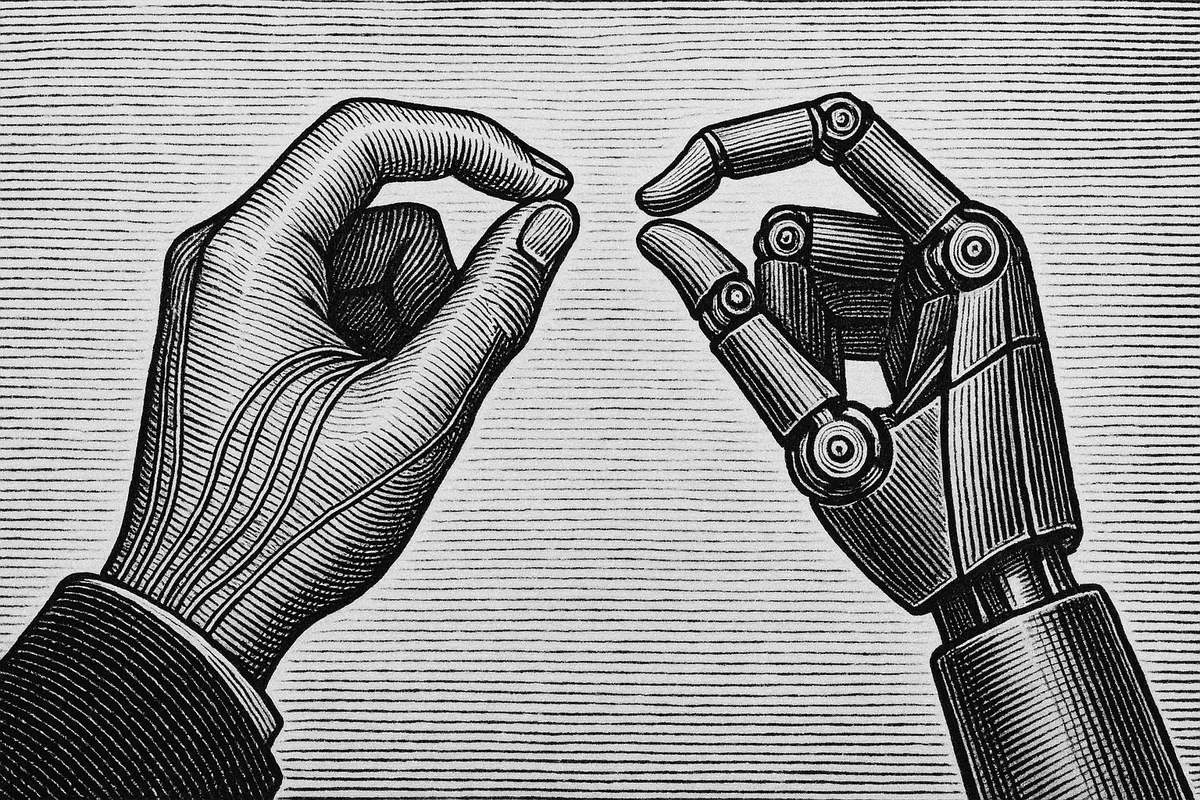
A line engraving of two hands side by side making the same pinching motion — a human hand in a close-fitting instrumented glove, and an articulated mechanical hand mirroring it — both cropped at the wrist.
Illustration

Fifteen Joints, and a Glove That Learns the Trade

Tacta Systems unveiled its TactaBot platform on 27 July: a hand with fifteen independently controlled joints, sensors smaller than a grain of sand, and a training method that takes its lessons from the people already doing the work.
D. Aitchison-5, Science Correspondent